Start with where the photographs will appear
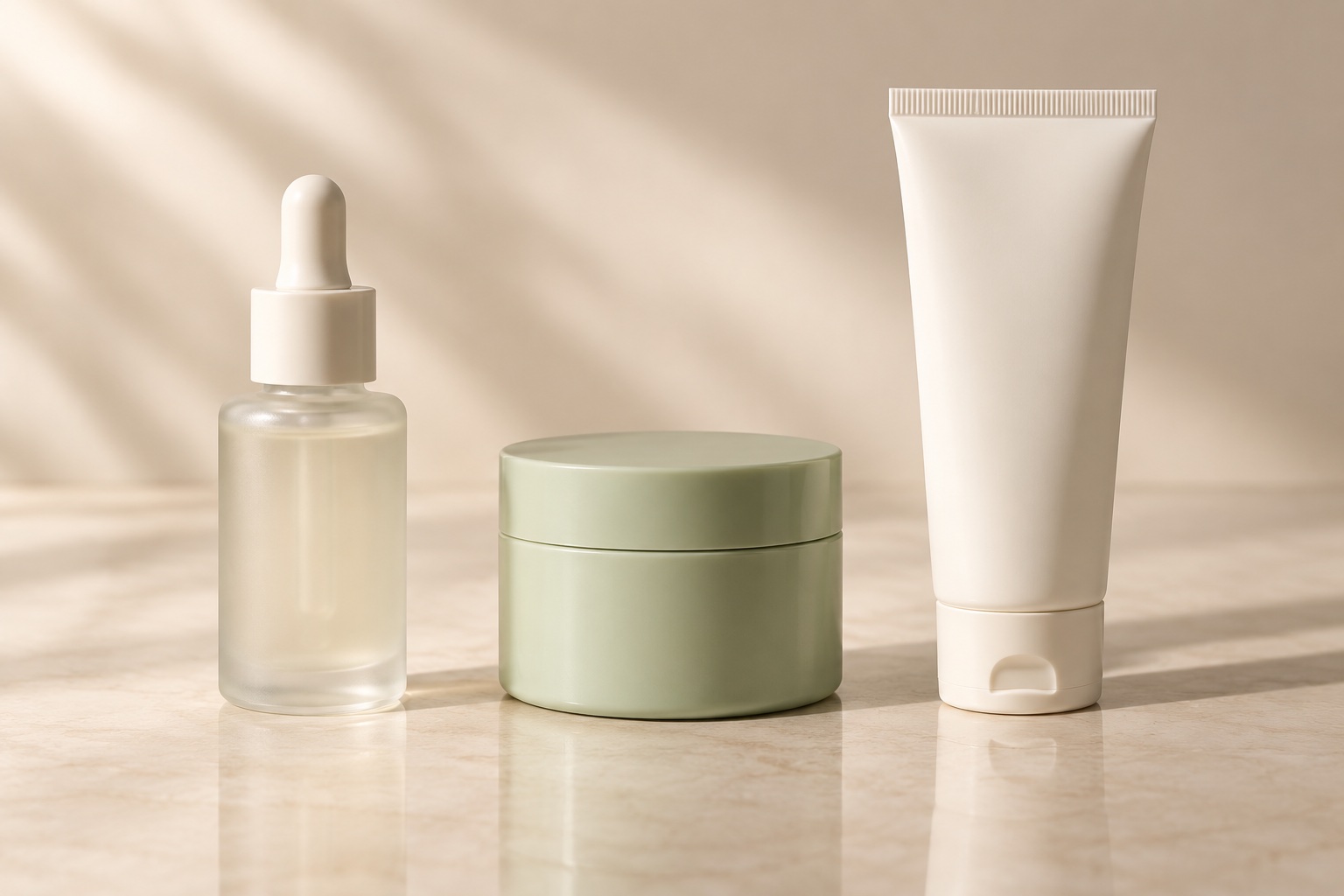
A skincare launch can need several different kinds of photograph: a clear product listing, a collection image, a close-up of the packaging and a styled image for a campaign. Before requesting a quotation, list the places your images will appear and what each one needs to explain.
For your online shop, identify the main image and any supporting views. For a website banner, show the intended layout and where the headline will sit. If you need portrait and landscape versions, include both in the brief rather than assuming one crop will suit every space.
Separate essential launch images from additional ideas. This gives the studio a clear scope to quote and helps you prioritise the photographs that customers need to understand your range.
Give each product an explicit shot list
List each bottle, jar, tube or compact by product code, size and variant. Then say which views you need for that item. Similar packaging does not mean the products are interchangeable: a different label, lid, shade or fill colour may need its own photograph.
| Image | What to specify |
|---|---|
| Main packshot | Product, preferred front, background and whether the lid is on. |
| Supporting view | The side, back, dispenser or other detail customers need to see. |
| Product with carton | Which packaging is supplied with the purchase and how it should be arranged. |
| Texture detail | The actual formula to show, the presentation required and permission to open the sample. |
| Collection image | The exact products included and the intended crop or layout. |
This is a planning example, not a fixed package. You may need only some of these images. Our guide to choosing how many photographs you need helps you connect the shot list to the questions your customers are asking.
Use final packaging and identify the important details
Send samples with the packaging, artwork and finish you intend to sell. Check that labels sit as intended and that cartons are not crushed or marked. If you only have prototypes, explain what will change before the shoot so the studio can assess the implications.
Point out the details that must read clearly: the product name, size, shade reference or an embossed mark, for example. A photograph showing the whole range may not also make every line of small print legible. Agree a closer view if that detail is important.
Explain the real surface finish too. Frosted glass, glossy caps and metallic lettering should remain recognisable. Send references to show the look you want, particularly if the images need to match an existing collection. Our reflective product photography guide covers briefing those surfaces in more detail.
Brief texture photographs separately from closed packshots
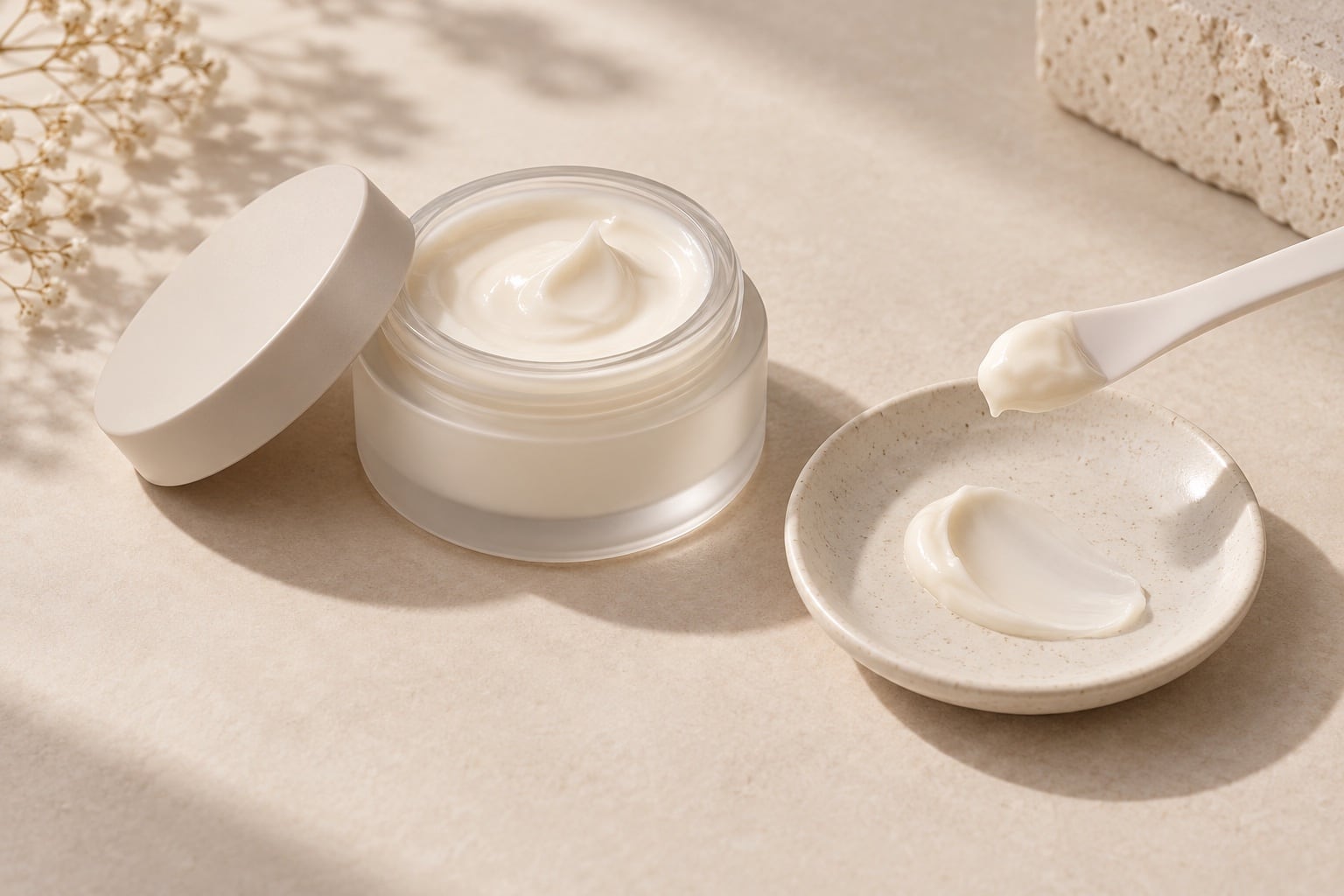
If you want to show a cream, gel, powder or liquid outside its packaging, include that as a separate request. Say whether you want an open jar, a small amount on an applicator or a standalone texture detail. These are different compositions from a closed product photograph.
Identify the exact formula or shade and supply any relevant handling instructions. Agree which samples may be opened, dispensed or used for styling. Ask how many samples the planned work will need, including whether separate unopened packaging should be reserved for clean packshots.
Keep the presentation faithful to the product. A clear gel should not be presented as an opaque cream, and a texture image should not imply a different colour or finish from the supplied sample. The illustrations here use fictional products to show possible compositions; your commissioned photographs should represent your own products.
If your brief includes application on a person, raise that at the enquiry stage so availability, arrangements and scope can be confirmed separately.
Plan collection images and styling with a clear purpose
Specify exactly which products belong in each group photograph. A complete routine, a gift set and a selection of bestsellers may contain different items. State whether cartons and accessories should appear, and whether everything shown is included in the purchase.
For a campaign image, describe the intended mood and provide a small number of relevant references with notes. Explain which elements you like: the background, spacing, shadows or crop. This is more useful than sending several unrelated images with no indication of what to follow.
Be deliberate about props. A fruit, flower or botanical ingredient beside a product can suggest something about its contents or fragrance. Include it only when that association is accurate and appropriate to your brand. Confirm who will supply any props and whether their preparation is included in the quotation.
Our packshots or lifestyle photography guide can help you decide how much of each type to commission.
Send a brief the studio can quote and check
“We are launching four skincare products: two serum bottles, a moisturiser jar and a cleanser tube. We need one front packshot of each on white, one image of all four together and a texture photograph of the moisturiser. Final labelled samples are available. Please quote the texture setup separately and advise how many samples to send. Our website banner also needs a landscape crop with room for a headline.”
Add your product list, dimensions, reference images, required file specifications and deadline. List any additional shade or size variants, and agree what retouching should address. Labels, colours, shapes and defining surface details should remain faithful to the products.
Before delivery, confirm the agreed scope and flag any restrictions on opening samples. You can arrange a drop-off at our Loughton studio or send products by courier; our delivery guide explains the arrangements.
Explore our product photography service and photography samples, then send David your skincare or cosmetics brief to discuss the images your launch needs.