
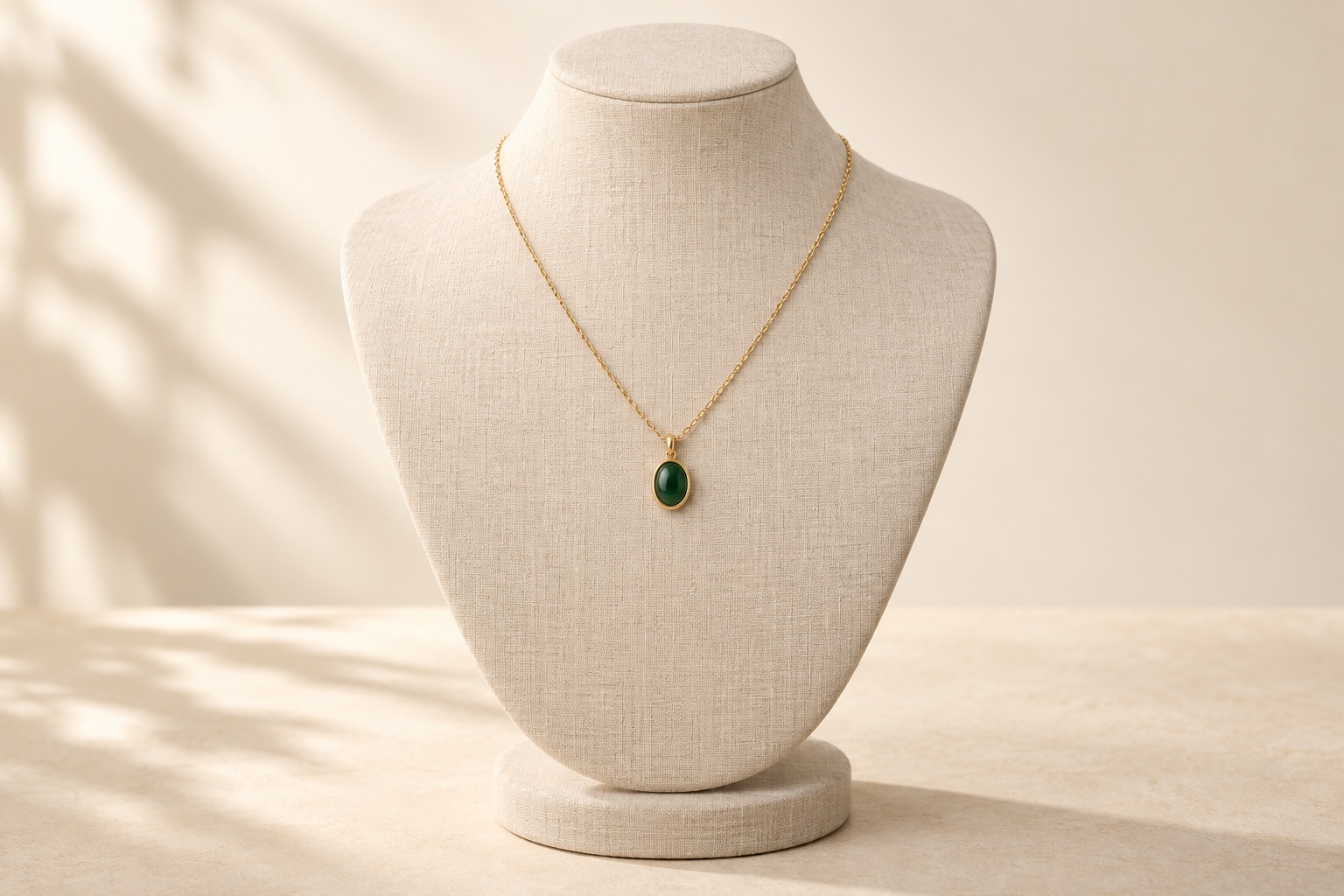
A close-up explains detail, but not always size
A pendant can fill a photograph whether it is delicate or substantial. Cropping makes small pieces easy to inspect, but removes the context a customer uses to judge their proportions. A sharp product image and a clear sense of scale solve different problems.
Begin your brief with the question the buyer needs answered. How far does an earring drop below the ear? How broad is a cuff on a wrist? Where does a necklace sit when worn? Choose an additional photograph that answers that question alongside the main product view.
Photographs should support the measurements in your product description. They should not be the only source of sizing information. A display bust, hand or model provides context, but each has its own proportions.
Choose scale context that suits the piece
| Jewellery | Useful context to discuss |
|---|---|
| Pendant or necklace | A worn view showing the chain position and pendant together, with the photographed chain length identified |
| Drop earrings | An ear and part of the neckline, with the complete drop visible |
| Cuff or bracelet | A wrist view showing the width and how the piece sits, with the sample size recorded |
| Ring | A hand view showing the setting and band in context, alongside the ring size in the listing |
A stand or bust can help explain shape and drape when a worn image is not part of the brief. It does not prove how a necklace will fit every customer. Tell the photographer whether the display is simply a presentation aid or a reference whose dimensions will be supplied.
Ask about the practical arrangements before choosing a modelled shoot. Confirm who supplies the model, the pieces and sizes to be worn, styling, the intended image use and what the quotation includes. A reference to a worn photograph does not by itself book those arrangements.
Supply dimensions and identify the exact sample
Send the studio the measurements you publish with the product. Be specific about what each measurement covers: the pendant alone or its hanging loop, the full earring drop or just its decorative element, the bracelet width or its circumference. Do not leave the photographer to infer these from a close-up.
Record the photographed chain length, extender position and sample size where relevant. If one pendant is sold on several chain lengths, say which is shown and decide whether another view is needed. Use our jewellery variants guide to keep samples and filenames matched to the options customers select.
If you want dimensions added to an image, supply approved figures and agree exactly where the arrows should begin and end. Keep a clean version available too. A decorative arrow that points to the wrong part can confuse even when the number itself is correct.
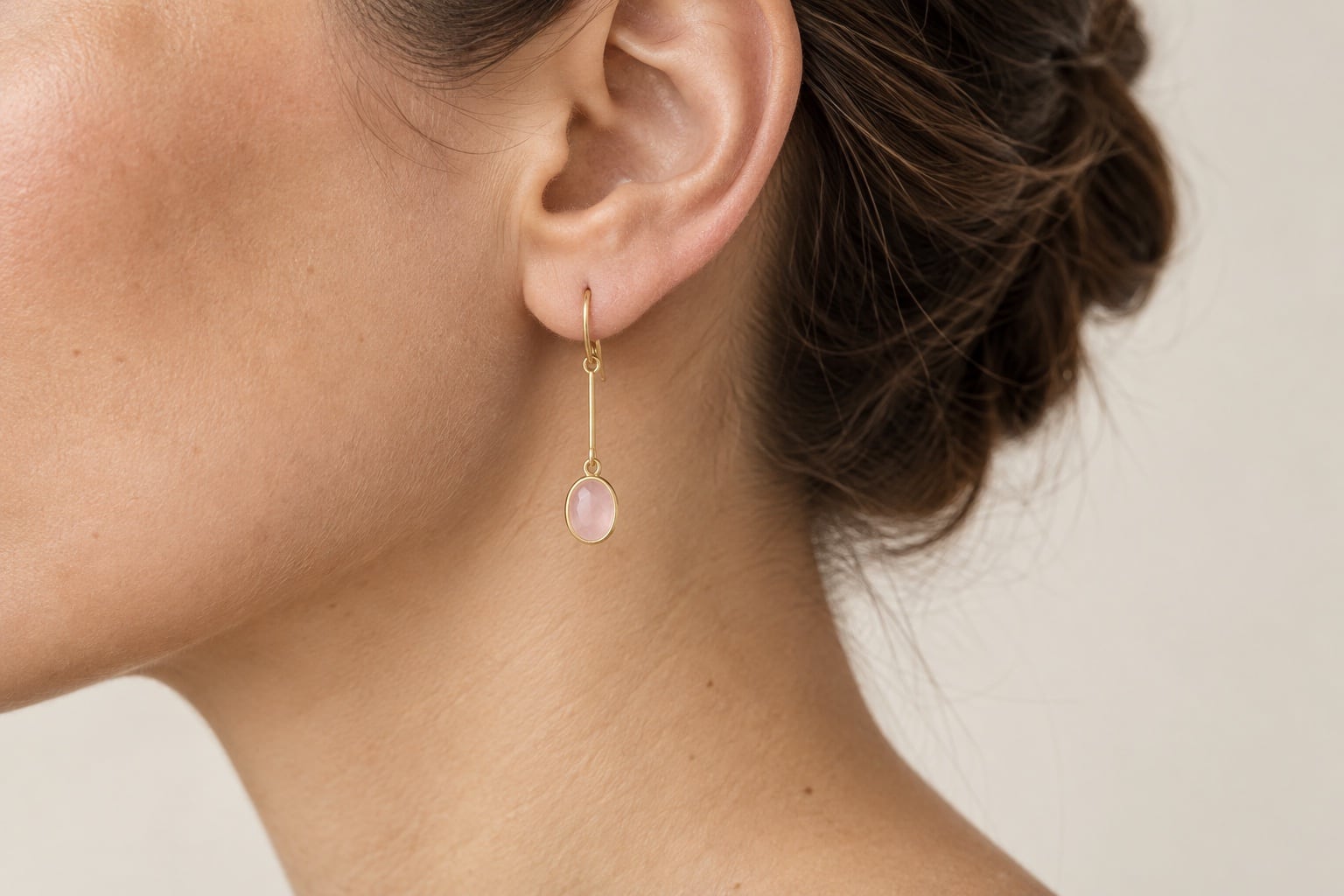
Agree framing that keeps the context useful
Give the photographer your shop layout or an example crop. The full piece and enough of its surroundings need to survive the final image shape. An earring photograph cropped below the ear loses a useful reference; a necklace photograph that cuts off the pendant cannot explain its overall proportions.
For a collection, distinguish a consistent layout from an identical product size on screen. Enlarging every piece until it fills the same space can make a small pendant appear similar in size to a much larger one. If the intention is a direct size comparison, state that clearly and agree how the relative scale will be maintained.
A group photograph can compare related designs, but should not leave buyers guessing what is included. Identify whether the image shows one purchased set or several separately sold pieces. Use individual photographs to make each product option clear.
Keep the detail view and the scale view working together
The main product image can show the design cleanly, a close-up can explain a clasp or setting, and a contextual image can show how the piece sits. You do not need every type of view for every item. Choose the combination that answers the questions about that design.
Our jewellery shot-list guide helps you plan those views. List any modelled or display photographs separately when requesting a quotation, rather than assuming they are included with a standard product view.
Example enquiry: “We need clean main views of six pendant designs, plus a photograph showing each in context at the neckline. We will supply the pendant measurements and the chain length for every sample. Please advise on model or display options, the framing and the separate cost of these additional views.”
Review the images in the actual shop layout
- Check that the complete piece and its useful scale context remain visible on a phone.
- Match the photographed sample and chain length to the product description.
- Check that dimension arrows refer to the intended part of the piece.
- Keep relative sizes accurate in images intended for comparison.
- Make it clear which pieces or accessories are included in the purchase.
The AI-created illustrations in this guide demonstrate briefing ideas; they are not measurements or examples of a specific product’s fit. For real studio work, browse our jewellery photography portfolio.
Send your collection details with the dimensions, desired views and intended shop layout. Our Loughton studio works with jewellery businesses in London, Essex and across the UK. We can discuss the presentation and quotation before you arrange the shoot.