

Guide · Photograph your jewellery
What affects the cost of jewellery photography?
Understand the work behind a jewellery photography quotation and send a clearer brief for your collection.
The cost depends on the finished views, the pieces and variants, their positioning and lighting, and the agreed detail and retouching. Send sample photographs and a view list so the studio can quote the actual work.
Start with the jewellery and the finished result
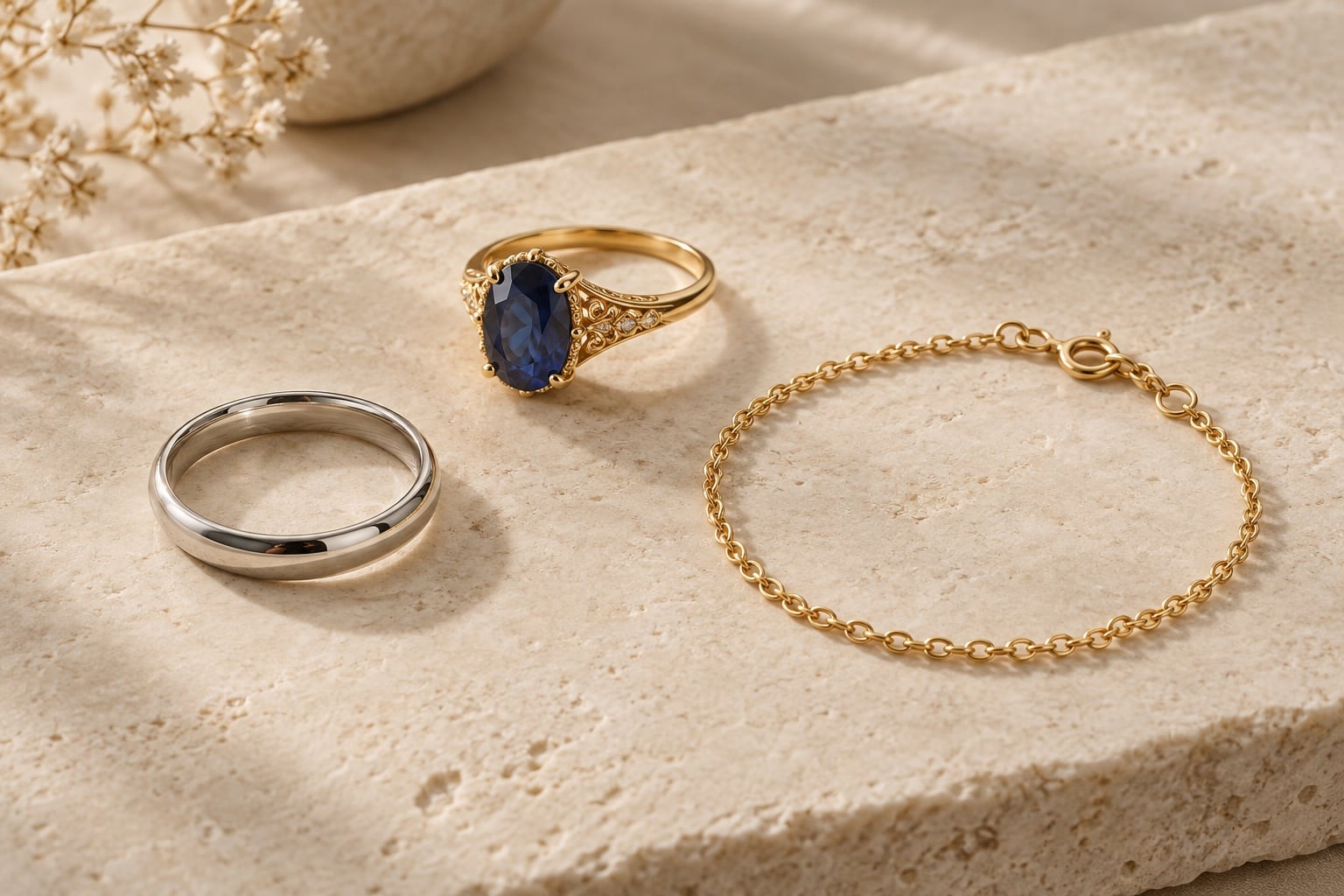
The cost of jewellery photography depends on the views you need, the work involved in presenting each piece and the agreed finish. A count of ten items is useful, but it does not describe whether those items are simple bands, raised gemstone rings or necklaces that need careful arrangement.
Send a few clear phone photographs with your enquiry, including a side view of any raised setting. Explain where the finished images will appear and which details customers need to inspect. A product-page image intended for close examination needs a different brief from a small collection thumbnail.
Our current photography prices are the starting point for rates. Request a quotation for your actual collection and required views; this guide explains the scope to discuss rather than giving a fixed price for every piece.
Metal finishes, stones and settings affect the work
Polished metal can reflect its surroundings strongly. The photograph needs reflections that describe the shape without hiding it. Brushed metal needs its texture retained, while a mixed-metal design may require both finishes to read clearly in one view. Size alone is not a reliable guide to the work involved.
For gemstone pieces, identify what matters: the colour, facets, profile of the setting or small surrounding stones. Avoid using “make it sparkle” as the entire brief. Send a reference for the overall presentation and explain which features of your own piece must remain accurate.
Positioning matters too. A chain may need arranging into a repeatable shape, earrings may need aligning as a pair, and a ring may need support to hold the chosen angle. Discuss whether supports will be visible and whether their removal is included in the finishing.
Count views and variants separately
List the finished photographs for each piece: main view, side profile, reverse, clasp detail or a collection group. A close-up that explains the setting is a separate deliverable from the main photograph, even when both show the same ring.
A simple quotation example
Six rings with a main view and a side profile require twelve finished images. Add close-ups for two of those rings and one collection group, and the brief becomes fifteen. This is an illustrative image count, not a package or a price.
List different metals and stones as actual saleable variants. Do not assume they can all be represented by recolouring one photograph. Our metal and gemstone variants guide explains how to identify samples and match files to the versions you sell.
Use the jewellery shot-list guide to choose useful views. The aim is to explain the piece, rather than commission the same number of photographs for every design.
Ask which views need focus stacking
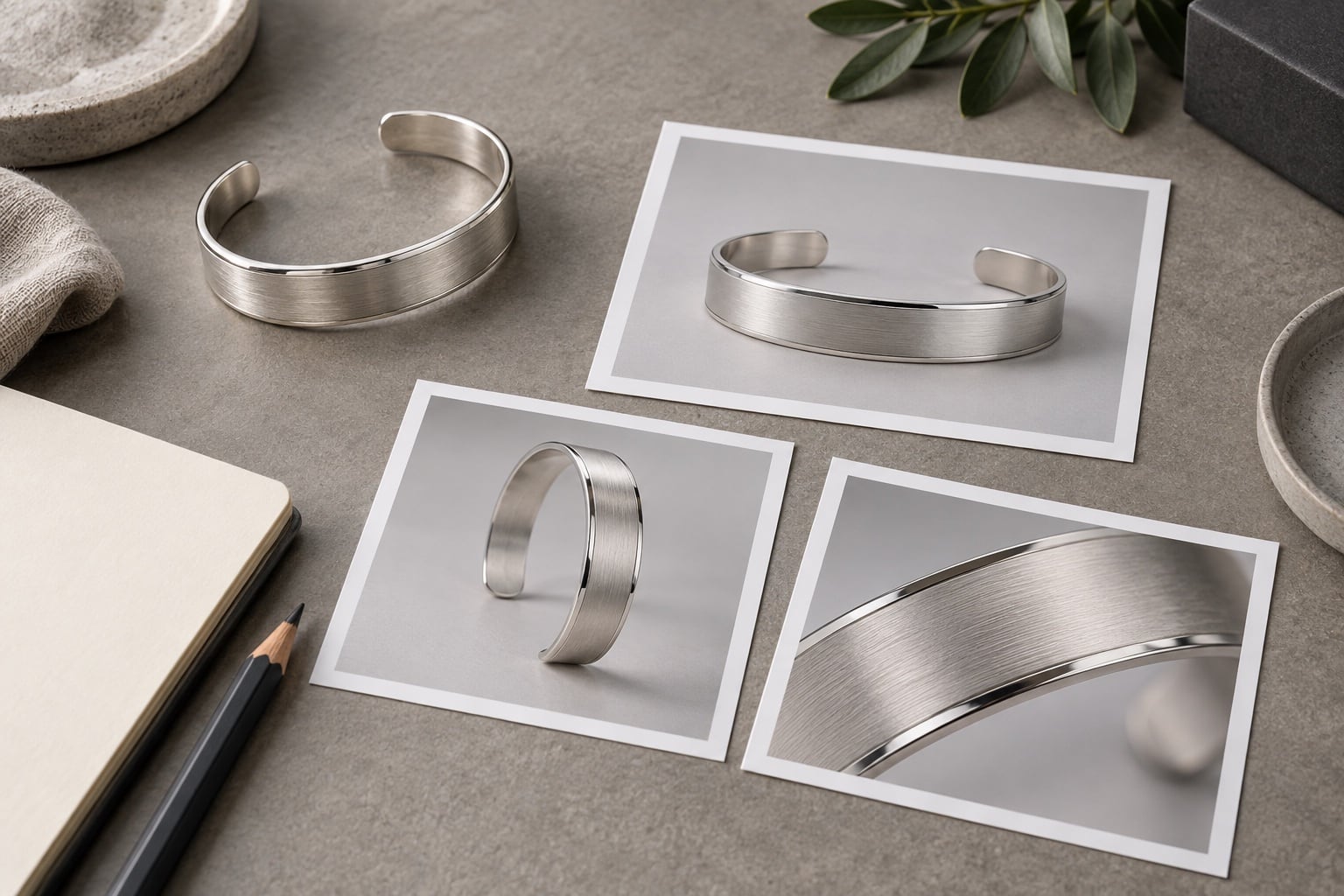
A raised setting and the band behind it can sit at different distances from the camera. Focus stacking combines captures focused at different depths into one finished view, as described in Adobe’s explanation of the technique. It adds capture and processing steps to discuss in the quotation.
Not every jewellery image needs the same treatment. Specify which details must be clear and ask the studio to assess the planned angle. Several captures used for a stack still produce one finished photograph; they are not a set of alternative views for your shop.
Our focus-stacking guide covers the decision in more detail. Keep the quote clear about which finished views use this process.
Agree what preparation and retouching include
Send representative pieces in the condition you want photographed. Follow the maker’s care instructions before delivery and flag delicate finishes or loose components. Ask the studio about handling requirements instead of assuming every material can be cleaned in the same way.
Separate temporary distractions from genuine product features. Dust removal, support removal and background work are different requests from changing the appearance of a surface. Hallmarks, engraving, texture and the shape of the setting should remain faithful to the piece.
| Scope | What to confirm |
|---|---|
| Presentation | Angle, background, shadow and arrangement of chains or pairs |
| Detail | Required close-ups and which views need focus stacking |
| Finishing | Dust, supports, reflections and the agreed level of retouching |
| Delivery | File dimensions, crops, naming, review stages and deadline |
| Changes | How additional views or changes after approval will be quoted |
A similar price per image is only comparable when the work and deliverables match. Confirm any applicable tax, carriage and agreed extras in the total quotation.
Send a brief that makes the quotation useful
- A list of pieces and variants, with a clear reference for each.
- Phone photographs showing the main product types and their settings.
- Required views and any features that need separate close-ups.
- An example of the angle, background and finish you want.
- The intended website or other use, file requirements and deadline.
If the budget is limited, distinguish essential product-page images from optional collection or campaign photographs. Discuss an agreed sample view before the full collection where appropriate, and confirm how that review will work. This gives the studio a clear decision to quote rather than an undefined request to reduce the price.
Browse our jewellery photography examples, then send your collection details for a quotation. Our Loughton studio works with jewellery businesses in London, Essex and across the UK. Agree an appointment for a personal drop-off; if sending by courier, letting us know beforehand helps us expect your delivery.
Service information and further reading
Ready to price your jewellery photography?
Send sample photographs, your collection list and the views you need. We can discuss the work and prepare a quotation.