One jewellery view can contain several important depths
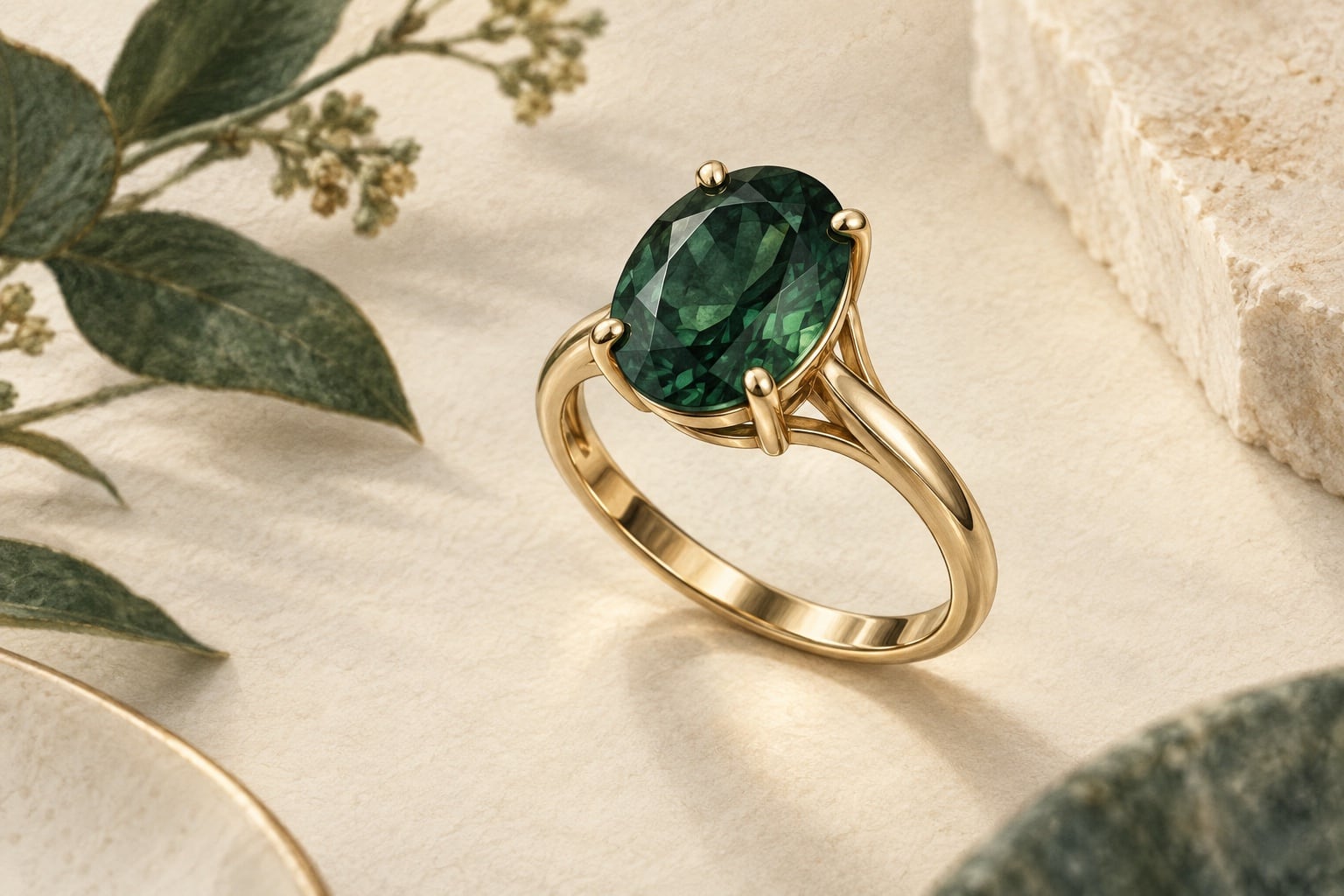
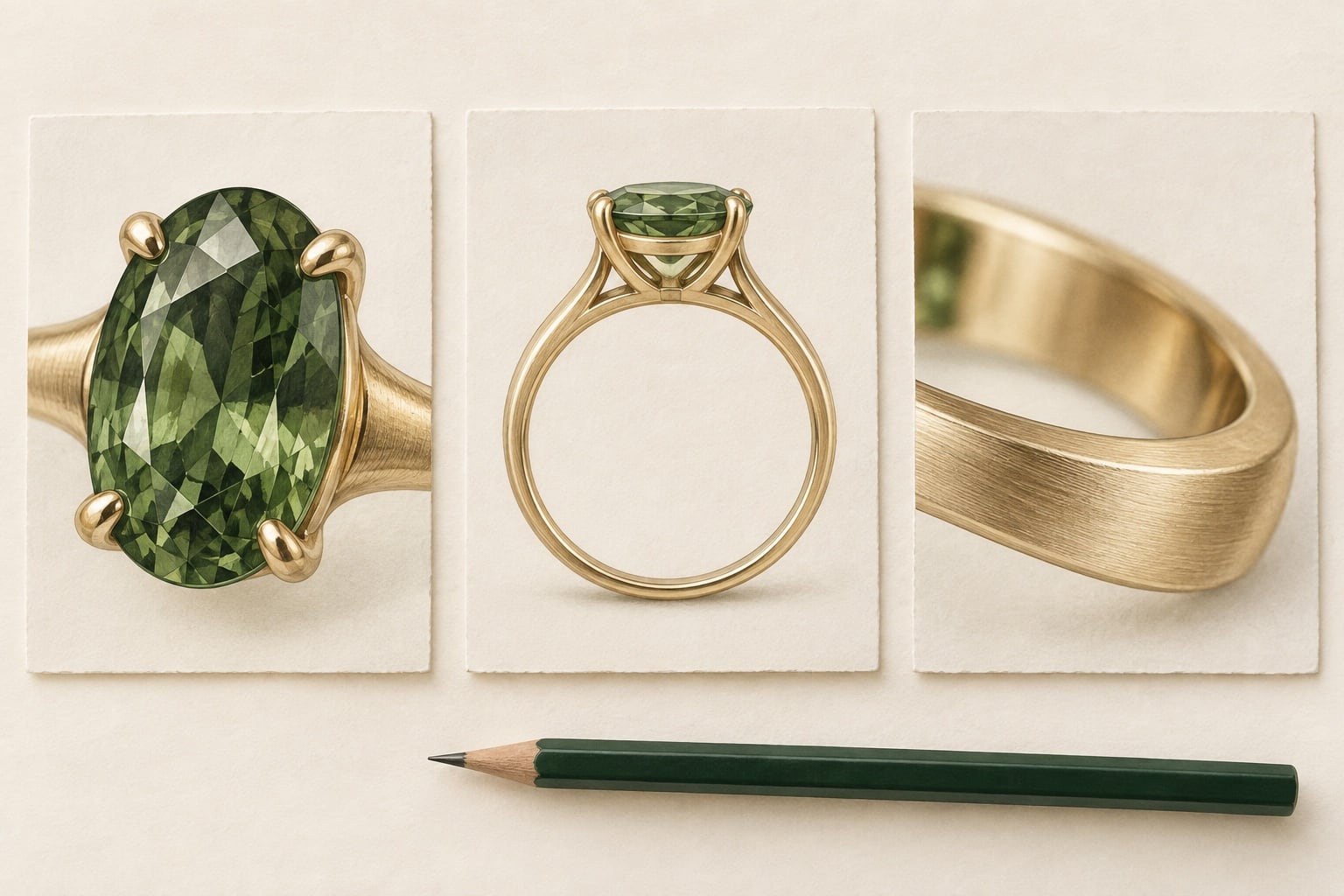
A three-quarter ring photograph may need to show the gemstone face, the claws holding it and the curve of the band behind it. Those details sit at different distances from the camera. In a close-up, one part can be sharp while another falls outside the area of acceptable focus.
For a customer assessing a setting or comparing designs, that softness may hide useful information. For a styled campaign photograph, a softer background may be intentional. The question is which details the particular image must explain.
Begin with the finished use. A small collection tile and an enlarged product-page view place different demands on the photograph. Tell the studio whether customers will be able to zoom in, and which features matter when they do.
What focus stacking does
Focus stacking combines photographs taken from the same view, with focus moved through different parts of the piece. The sharp areas are blended into one finished image to show more depth clearly. Adobe’s explanation of focus stacking describes the underlying process.
This differs from simply sharpening one photograph. Sharpening cannot supply a sharply captured view of a feature that was out of focus in the original. A stack needs a suitable sequence made for that purpose.
For the brief, you do not need to prescribe the number of captures or camera settings. Explain the required result, such as “the stone, claws and full visible band should be clear”, then ask whether stacking is appropriate for that composition.
Which jewellery images are worth discussing?
| Planned image | Decision to discuss |
|---|---|
| Ring at a three-quarter angle | Does the customer need to inspect the stone, setting and rear of the band in the same view? |
| Raised or layered pendant | Should both the front decoration and the deeper structure remain clear? |
| Pair of earrings arranged at different depths | Must both pieces be sharp, or would a different arrangement explain the pair more clearly? |
| Close-up of a clasp or engraving | Which surfaces need sharp detail, and would a more direct angle be sufficient? |
| Styled jewellery campaign image | Is a selective area of focus part of the intended mood? |
These are planning questions, not a rule that every ring or pendant needs stacking. The view, depth of the piece and intended output all matter. A front-facing composition may solve a different problem from an angled one; choose the angle for the information it conveys before choosing the technique.
Our jewellery shot-list guide helps you decide which views to commission. This guide helps you agree the detail those chosen views need to show.
Sharpness does not replace lighting or careful retouching
A sharp reflection can still obscure the shape of polished metal. A clearly focused stone can still need a different lighting treatment to describe its facets. Discuss focus, reflections and colour as separate parts of the finish rather than assuming stacking resolves them all.
Preserve the character of the piece. Brushed metal should keep its texture, a handmade surface should not become uniformly smooth, and claws should retain their real shape. Ask for temporary distractions such as dust to be assessed separately from genuine features of the jewellery.
When reviewing a sample, look at the transitions around claws, overlapping edges and small openings. Check that fine details remain intact and the result looks natural. Also view it at the intended display size: the aim is to explain the jewellery clearly, not to make every surface look artificially hard.
Use the jewellery photography gallery to discuss the metal finish, angle and overall presentation you like. Its real studio photographs are a more useful reference for the service than a generic instruction to “make everything sparkle”.
Compare quotations by finished view and scope
A sequence used to build a stack produces one finished view. It is not the same as receiving several different angles of the ring. If you need a main view, side profile and detail, list those separately in the quotation request.
Ask which views are being quoted as stacked images and what finishing and output are included. Confirm whether the quotation covers the background, agreed retouching, required crop sizes and colour variants. Our current photography prices list stacked jewellery images separately; the product list and requested views define the work to discuss.
If you are uncertain, send photographs of a representative piece and explain where the finished images will appear. For a new collection, agreeing one representative view can help establish the intended finish before applying it across a larger brief. Confirm that review arrangement with the studio when booking.
A useful brief for detailed jewellery photography
Example enquiry: “We have six rings with raised gemstone settings. We need a consistent main view for our shop, with enough detail to inspect the claws and the visible band. We also need a separate side profile. Please advise which views would benefit from focus stacking and quote those clearly.”
- Give each piece a reference and identify its metal, finish and stone.
- List the finished views and the details that must be clear in each.
- Send the website layout or expected display dimensions.
- Include references for angle, framing, background and reflections.
- Identify delicate parts and any genuine surface features to preserve.
- State the number of variants and your required delivery date.
Product Packshot Photography works with jewellery collections at the Loughton studio for clients in London, Essex and across the UK. Send your collection details to discuss the views and level of finishing you need. A precise brief makes it easier to compare a quotation with the photographs you intend to use.