

Guide · Plan your photography
When is 360° product photography worth booking?
Work out whether an interactive spin will help customers understand your product, and plan the photography and website presentation together.
Consider a 360° spin when the sides and back reveal useful buying information. Keep essential still photographs, and agree how the interactive viewer will work on your shop before commissioning the shoot.
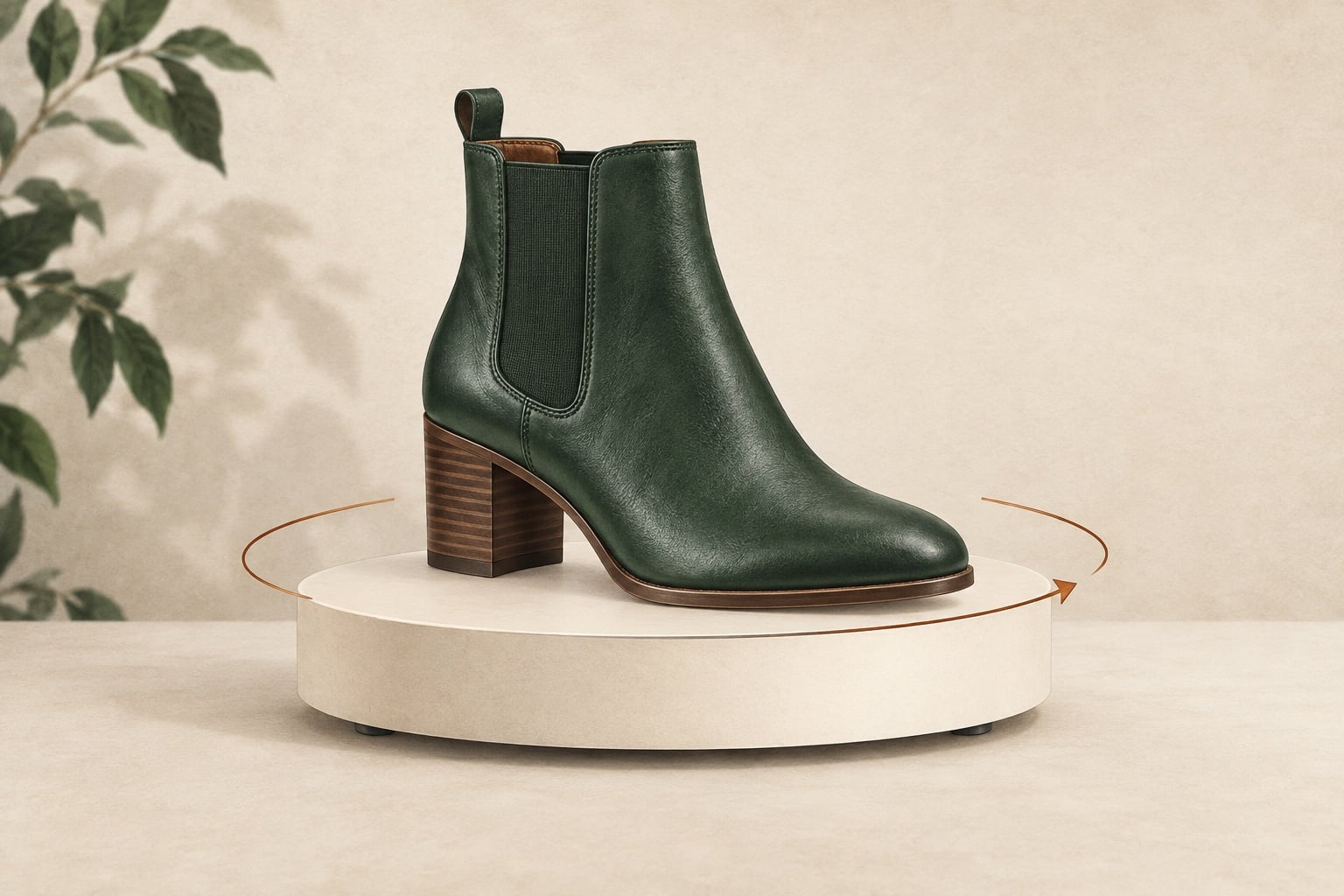
Start with what a customer needs to turn over
Think about the moment someone picks up your product in a shop. Would they turn it around to inspect the back, compare the profile or understand how the parts fit together? If those views help explain the purchase, a 360° spin is worth discussing. If almost all the useful information sits on one flat face, a small set of still photographs may answer the question more directly.
A spin is a sequence of photographs presented in an interactive viewer. The customer can move through the angles rather than relying on a single chosen view. It is especially useful when the relationship between the front, sides and back matters. It does not automatically reveal the underside, inside or a working mechanism: those need to be planned separately.
Before requesting a quotation, finish this sentence: “The customer needs to turn the product around to see…” A specific answer gives the shoot a purpose.
Decide whether rotation adds useful information
| Buying question | Useful photography to discuss |
|---|---|
| What does the shape look like from the side and back? | A spin can connect those views and show how the shape changes as the item turns. |
| How is a clasp, fastening or setting constructed? | A spin may establish its position; a separate close-up can show the fine detail. |
| What is printed on a small label? | A clear, readable still view is often the more direct answer. |
| What comes inside the box? | An open-box or laid-out contents photograph makes the individual pieces easier to identify. |
| How does the product move or work? | Discuss a demonstration separately. Rotating a closed product does not demonstrate its operation. |
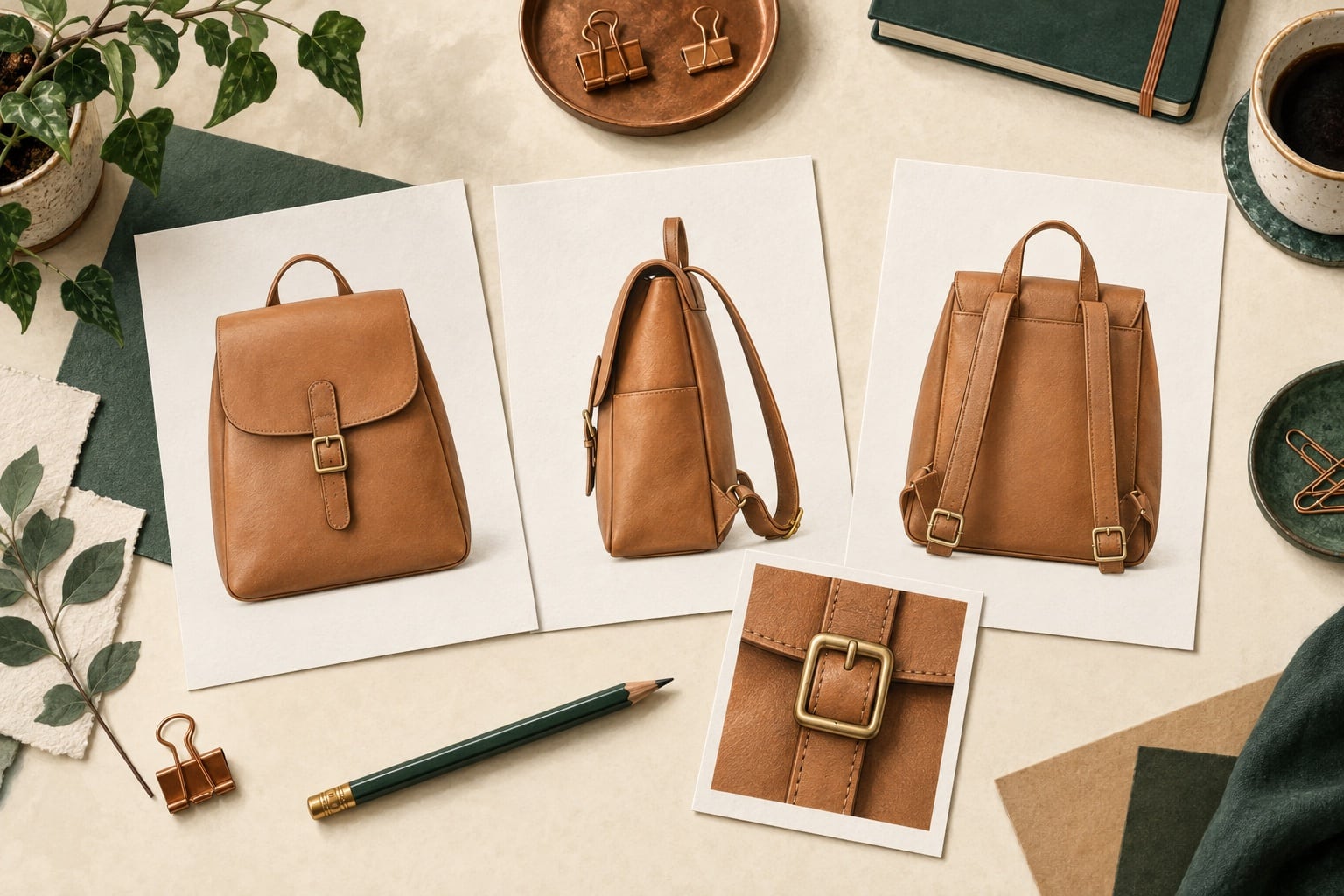
For example, a backpack may have a useful front pocket, side profile and padded rear panel. A spin can help someone connect those features. It would still need a separate interior view if the internal compartments are an important selling point. This is an illustrative planning example, not a fixed package.
Keep a clear main photograph and essential details
Plan the spin alongside the still images your shop needs. Your category grid needs an immediate view of the product, and a close-up can direct attention to a feature that is easy to miss during rotation. A scale image or styled photograph answers a different question again.
If the budget is limited, identify the missing buying information first. A product with no useful main image or no photograph of its contents may benefit more from filling those gaps before adding a spin. Our guide to choosing your product image count helps you prioritise the still views.
Do not assume that every frame in a rotation will also be supplied as a separately finished catalogue photograph. List the stills and crops you require so the quotation covers them explicitly.
Agree how the spin will appear on your website
Send the studio your website address and the name of your shop platform before the shoot. Ask your website developer how the interactive viewer will fit into the product page. A set of image files needs a suitable presentation; it should not be assumed that uploading them to an ordinary image gallery will create a draggable spin.
- Confirm who will supply and install the viewer, and whether any separate costs apply.
- Agree image dimensions, framing, background and delivery requirements.
- Check how the customer discovers and controls the spin on a phone.
- Keep an ordinary product image available while the interactive view loads or if it cannot be displayed.
- Try a representative example on the intended page before preparing a large range.
These are questions to resolve with the people building your shop, rather than promises of compatibility with every platform. If you also sell through marketplaces, check their current supported image types separately.
Prepare for the sides that are usually hidden
A front-facing photograph can leave the back out of view; a rotation brings it into the sequence. Check the whole sample for temporary stickers, damaged edges, dust and incorrect labels. Supply the actual version customers will receive, including the right finish and fittings.
Flag anything that is loose, unstable or needs support. Tell the studio if a strap should hang naturally, a lid must stay closed or an accessory belongs beside the product. Reflective surfaces and transparent parts also deserve a mention when discussing the approach. Send reference photographs and dimensions so suitability can be assessed before delivery.
Where several variants are required, list them individually. Do not assume changing a colour digitally is an accurate substitute for photographing a different material or finish. Your written photography brief should identify the genuine differences.
Ask for a quotation around a clear first project
Send a product list, approximate dimensions, reference photographs and the website where the spins will appear. Add the still photographs you need, the variants involved and your intended launch date. If you are exploring the format for the first time, ask about starting with a representative product before committing the whole catalogue.
See our 360° product photography examples to try real studio spins. Use them to explain which aspects of the presentation you want to discuss. Current rates are on the photography prices page; the brief determines the work to include in your quotation.
A useful enquiry: “We sell backpacks and want customers to inspect the side pockets and rear panel. We have three variants, need main and interior stills as well, and would like to discuss a spin for one product first. Here is our shop address and an example of the product.”
The aim is a clearer view of the product. A spin is worth commissioning when it adds information your customers need and has a practical place in your shop.
Service information and further reading
Would a spin help explain your product?
Send a product photograph, its dimensions and your shop address. We can discuss a suitable first project and the still images you need alongside it.